
Equipment workshop
Tooling and assembly equipment are held in-house, so a beam change never has to leave the building.
Sourcing custom optics for commercial luminaires means judging design capability, tooling ownership and assembly control long before a single sample is cut. This guide compares trading companies, assemblers and a full-stack optical lens manufacturer, and shows how a beam-control series like Star Gather helps you test what any lighting optical lens supplier can actually deliver — from reproducible beam angles to modular lens elements that move across fixtures.

Most complications in a custom optics project are not optical at all — they start when the party selling you the lens does not control the tooling, the material choice or the assembly line. Read the five rows below against the answers you actually receive.
Swipe sideways to see every column →
| Capability | Trading company | Assembler | Full-stack lens manufacturer |
|---|---|---|---|
| In-house optical design | Sources finished optics from third parties; a design change is routed back to the original maker. | Works from an existing lens catalogue; input on optical redesign is limited. | Optical design and beam development sit with the same team that builds the part, so a beam change is a design task, not a purchase order. |
| Tooling ownership | No tooling on site and often no clear answer about who holds the mould. | Holds assembly jigs, while lens tooling may still sit with an outside moulder. | Tooling and assembly equipment are held in-house, which keeps a revision inside one process instead of across two suppliers. |
| Lens material know-how | Material selection is limited to whatever the source factory offers. | Knows assembly tolerances better than optical material behaviour over time. | Selects lens materials for longevity against discoloration and environmental wear, and pairs them with optimised light-transmission materials. |
| Modular assembly control | Modules arrive pre-built; fixture adaptation depends on the source factory's schedule. | Can change housings and fixture fit, but usually not the lens element itself. | Keeps lens elements modular so one optical platform adapts quickly across different fixtures. |
| Post-sale engineering support | Support stops at order handover; engineering questions travel upstream and back. | Strong on fit and installation, thinner on beam behaviour and control-system interaction. | Beam-angle, glare and source-compatibility questions reach the team that designed the optic. |
Each of these is a structural advantage rather than a marketing line — it changes what happens when your beam requirement moves.
Tooling and assembly equipment are held in-house, so a beam change never has to leave the building.
Ultrathin lenses keep the fixture compact without giving up optical performance.
Beam adjustments for targeted illumination are made quickly inside a single optic design.
Comfortable, low-glare scenes for museums, galleries and high-end retail.
Star Gather is built around precise beam control and glare reduction through advanced optical design — the two properties that decide whether an accent scene looks sharp or simply bright.
Precise beam control and glare reduction from the optical design itself, not from an added accessory.
Ultrathin optical lenses for enhanced efficiency, held in a patented assembly that keeps the form factor compact without compromising optical performance.
Light-mixing optical lenses for targeted illumination, enabling rapid customization and precise beam adjustment.
Modular lens elements that adapt across different lighting fixtures, so one platform can serve several luminaire families.
Consistent luminous output and reproducible beam angles, matched to compatibility with diverse LED sources.
Intelligent control-system integration for customizable lighting scenes and dynamic effects, with lens materials designed for longevity against discoloration and environmental wear.
Each scene below pairs a concrete Star Gather property with the decision it should trigger in your sourcing conversation.
Glare-reducing technology with minimized glare and heat emission, noted as compatible with intelligent dimming systems.
Ask how glare is held steady across the dimming range, and request a scene sample using the dimming protocol you actually install.
Precise beam control with light-mixing optical lenses for targeted illumination on product displays.
Confirm the beam angles available for your accent spacing, then test whether the chosen angle still reads cleanly at the merchandise surface.
Modular lens elements that adapt quickly across different lighting fixtures, supported by a patented compact assembly.
Confirm that one lens module can serve several luminaire families in your range, and check whether the compact assembly fits your shallow housings.
Customizable beam patterns, including coloured lenses for outdoor lights as an option within the product family.
Confirm the colour set and lens material suitability for exposed conditions, and ask how quickly a custom pattern can be produced repeatedly.
A beam-control quote is only as precise as the constraints you hand over. Six items give an optics engineer enough to answer with a real configuration instead of a catalogue reference.
Share the inputs on the left and we will come back on configuration, customization path and sampling for the Star Gather platform.
Review Star Gather firstBring a beam angle, a fixture drawing and your LED source details. That is enough to move from a general series discussion to a configuration you can sample and qualify.
Keep adjacent product options together for a faster catalog comparison.
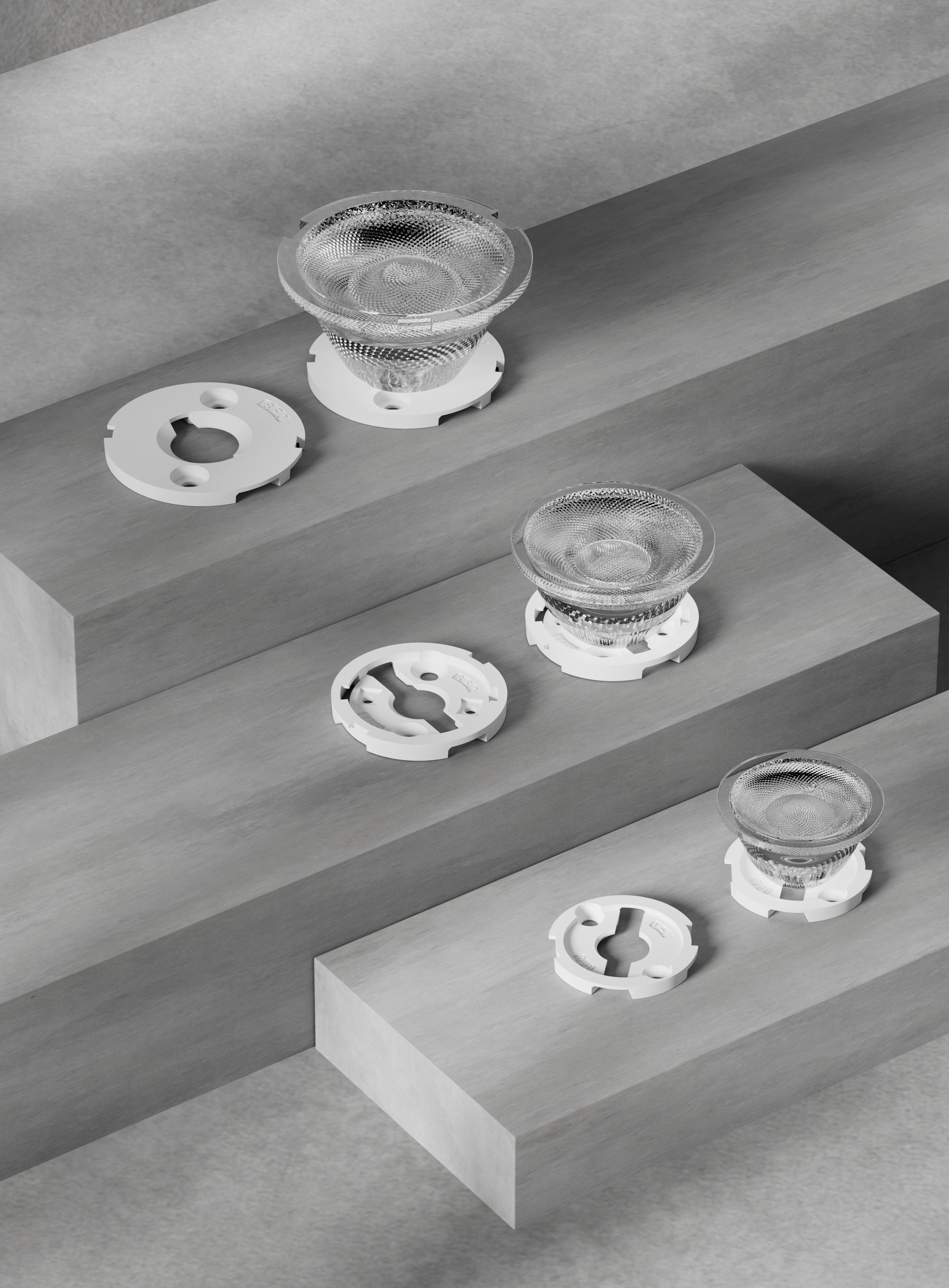
The Star Joy glare-controlled track light delivers precise illumination with minimized visual discomfort. Engineered by expert optical lens manufacturers, it suits commercial led lighting…
View product
Star Curtain offers precision-controlled illumination with advanced lens optical design, ideal for commercial lighting design and seamless integration in recessed fixture and track-light systems…
View product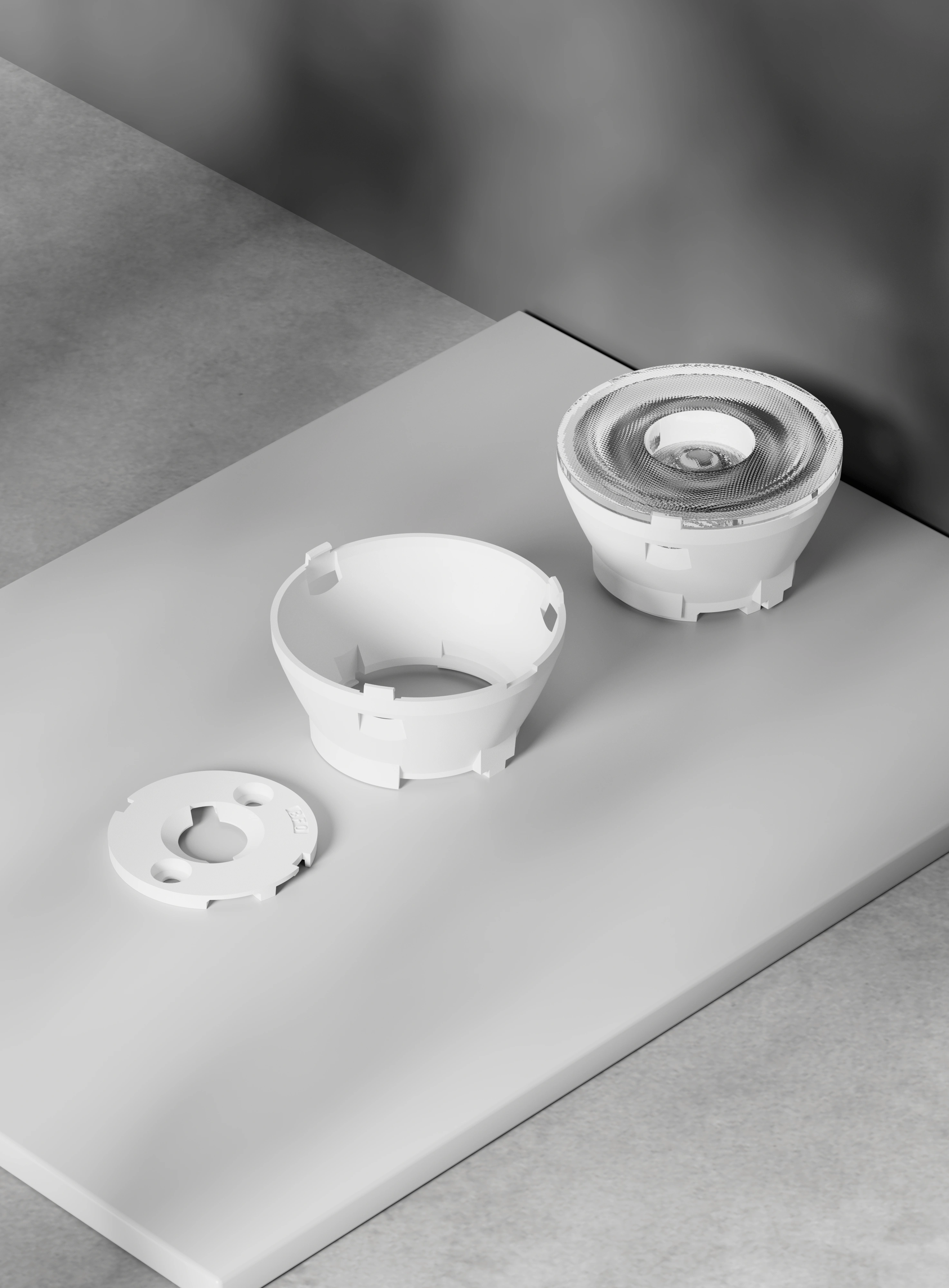
Star Build offers precise, uniform illumination with controlled glare, designed for architects and lighting professionals. This advanced optical lens solution integrates seamlessly with recessed…
View productstar gather combines an advanced optical design with ultrathin optical lenses, which is where its precise beam control and glare-reducing technology come from. the series is specified for consistent luminous output and reproducible beam angles, supported by optimised light-transmission materials.
the patented assembly accommodates ultrathin optical lenses, so a fixture can keep a compact form factor without compromising optical performance. that matters most when the housing is shallow and there is very little distance between the led source and the lens.
yes. star gather integrates with intelligent control systems to enable customizable lighting scenes and dynamic effects, and it synergizes with proprietary control electronics for streamlined compatibility and installation. in museum and gallery settings the series is noted as compatible with intelligent dimming systems while minimizing glare and heat emission.
the series is built for compatibility with diverse led sources, and its modular lens elements support rapid adaptation across different lighting fixtures. in practice that lets one optic platform cover several luminaire families instead of a single dedicated model, which is why it suits professional lighting systems in commercial and institutional settings.
lens materials in the series are designed for longevity against discoloration and environmental wear. the exact material grade is not published on the product page, so confirm the specific compound and any outdoor suitability with the supplier when you request your quote.
yes. integrated light-mixing technology allows rapid customization and precise beam adjustments for targeted illumination, and customizable beam patterns include coloured lenses for outdoor lights as an option within the product family. confirm the exact colour set and beam pattern you need at specification stage.
